
7 Flooring Mistakes That Cost West Michigan Homeowners Money (And How to Avoid Them)
Published October 18, 2026
Replacing the flooring in your home should be exciting. You're updating your space, improving its appearance, and investing in something you'll use every single day.
But flooring projects can become surprisingly expensive when small mistakes turn into major problems.
Maybe you ordered too little flooring. Perhaps you chose a beautiful product that wasn't designed for your basement. Or maybe the flooring itself was affordable, but unexpected installation costs pushed your renovation over budget.
These situations happen more often than homeowners expect.
For homeowners in Grand Rapids, Grandville, Wyoming, Kentwood, and throughout West
Michigan, understanding common flooring mistakes before shopping can help protect both your home and your wallet.
Here are seven mistakes worth avoiding before your next flooring project.

Mistake #1: Shopping Only by Price Per Square Foot
It's easy to walk into a flooring store, see an attractive price per square foot, and assume you've found the best deal.
But the flooring price is only one part of your renovation budget.
Depending on the project, additional expenses may include:
Removing and disposing of existing flooring
Subfloor preparation or repairs
Underlayment and moisture protection
Transitions, trim, and molding
Installation labor and delivery
For example, imagine purchasing flooring for a 500-square-foot living area.
At $2.50 per square foot, the basic material cost is $1,250.
But if you need 10% additional material for cuts and waste, the flooring cost becomes $1,375 before installation or supplies.
That difference matters.
For a more detailed breakdown, read our 2026 Grand Rapids Flooring Cost Guide.
How to avoid this mistake: Calculate the complete project budget before comparing flooring products. Ask installers for itemized estimates so you understand what is included.
Mistake #2: Buying the Wrong Flooring for the Room
Not every flooring product belongs in every room.
A floor that performs beautifully in an upstairs bedroom might struggle in a busy entryway where wet boots, snow, and road salt are common.
West Michigan's changing seasons make room-specific flooring choices especially important.
Kitchens and Bathrooms
These rooms experience spills, splashes, and moisture.
Waterproof luxury vinyl plank and properly installed porcelain tile are worth considering. Certain water-resistant laminate products may also be suitable, depending on manufacturer approval.
Living Rooms and Bedrooms
Homeowners generally have more flexibility in these spaces.
Laminate, luxury vinyl plank, hardwood, and carpet can all be appropriate choices depending on comfort, traffic, appearance, and maintenance preferences.
Basements
Basements require special attention because moisture can enter through concrete slabs or foundation walls.
The U.S. Environmental Protection Agency recommends addressing moisture problems before remodeling basement living spaces.
How to avoid this mistake: Choose flooring based on how each room is used, its moisture exposure, and the manufacturer's installation requirements.
Mistake #3: Not Buying Enough Flooring
Few renovation problems are more frustrating than reaching the final room and discovering you're short several boxes.
This can become particularly troublesome when purchasing liquidation or discontinued flooring.
Unlike regularly stocked products, closeout inventory may not be available for future orders.
How Much Extra Flooring Do You Need?
Start by measuring the length and width of each room.
Multiply those measurements to calculate the approximate square footage.
For example:
14 feet × 16 feet = 224 square feet
For a straightforward plank installation, a 10% waste allowance is a useful initial estimate.
224 × 1.10 = 246.4 square feet.
In this example, you would plan for approximately 247 square feet before rounding up to full-box quantities.
The exact allowance depends on the room's shape, installation pattern, product specifications, and installer recommendations.
Complex layouts or diagonal patterns may require additional material.
How to avoid this mistake: Bring accurate room measurements when shopping and confirm the quantity required before purchasing.
Mistake #4: Ignoring Moisture Problems Before Installation
Waterproof flooring has become increasingly popular, but homeowners sometimes misunderstand what the term actually means.
A waterproof plank does not automatically make the entire floor assembly waterproof.
Water can still travel through seams, around edges, or beneath flooring.
This becomes especially important in basements, bathrooms, and kitchens.
Why Basement Moisture Is Different
A concrete basement floor can appear completely dry while moisture vapor continues moving through the slab.
Installing flooring without evaluating moisture conditions can create problems beneath the finished surface.
The EPA explains that moisture from leaks, seepage, and indoor humidity can contribute to mold and other building problems.
Learn more through the EPA's moisture control guidance.
Waterproof Doesn't Mean Floodproof
Even when the flooring material itself resists water, the subfloor and surrounding building materials may still be vulnerable.
Existing leaks or drainage problems should be corrected before installing new flooring.
How to avoid this mistake: Evaluate moisture conditions, follow manufacturer testing requirements, and address water intrusion before installation.
Mistake #5: Choosing Flooring Based Only on Appearance
Everyone wants beautiful floors.
But appearance alone doesn't tell you whether a product is appropriate for your household.
Two wood-look flooring products may appear nearly identical while offering different levels of scratch resistance, moisture protection, or installation flexibility.
Consider Your Household
Before choosing flooring, ask yourself:
Do you have dogs or other pets?
Are children frequently playing on the floor?
Is the room exposed to wet shoes or spills?
Will heavy furniture be moved across the surface?
How much daily foot traffic does the room receive?
These questions can help narrow your options.
Compare Product Specifications
For luxury vinyl plank, look at the wear layer, construction, and manufacturer recommendations.
For laminate, compare surface durability, water-resistance claims, and approved installation environments.
For hardwood, consider the wood species, finish, and expected maintenance.
How to avoid this mistake: Choose flooring that looks good and performs well for the way your household actually lives.
Mistake #6: Overlooking Subfloor Preparation
The flooring you see is only part of the installation.
What's underneath it can be just as important.
An uneven or damaged subfloor may create problems even when the flooring itself is high quality.
Depending on the product, poor preparation can contribute to movement, separation, noise, or premature wear.
Common Subfloor Problems
Before installation, check for:
Uneven areas or excessive variation in flatness
Loose or damaged subfloor panels
Moisture concerns
Debris or old adhesive
Cracks or other structural issues
Different flooring products have different installation tolerances.
For example, a rigid-core vinyl product may require specific subfloor flatness standards even though the planks feel firm and durable.
Why Cutting Corners Can Cost More
Skipping necessary preparation may save money initially but lead to repair or replacement costs later.
How to avoid this mistake: Follow the flooring manufacturer's installation instructions and address subfloor problems before laying new material.
Mistake #7: Assuming Discount Flooring Means Low-Quality Flooring
This mistake can cost homeowners money before the renovation even begins.
Some shoppers automatically associate discounted flooring with damaged, outdated, or inferior products.
But there is a significant difference between inexpensive flooring and quality flooring purchased at a discount.
Why Flooring Gets Liquidated
Retailers and distributors may need to move flooring because of:
Excess inventory
Discontinued colors or styles
Seasonal product changes
Warehouse space limitations
Bulk inventory liquidation
These circumstances don't automatically mean there's anything wrong with the flooring.
At Liquidation Land Discount Flooring, the business specializes in sourcing overstock and liquidated flooring from major retail channels.
You can learn more about the process in How We Source Our Liquidated Flooring.
What to Check Before Buying Liquidation Flooring
Discounted flooring should still be evaluated carefully.
Review the product specifications, box labels, available quantity, installation instructions, and applicable warranty information.
Make sure all the material you purchase matches in style, color, and other relevant product identifiers.
How to avoid this mistake: Compare quality, performance, available quantity, and total price instead of judging a flooring product solely by its discount.
Bonus: Don't Forget About Future Repairs
One additional consideration deserves attention, especially when purchasing closeout flooring.
What happens if you need to replace a few planks two years from now?
A discontinued product may be difficult to match.
For that reason, consider keeping some unused material after installation.
Store spare flooring according to manufacturer recommendations so it remains available if you need a repair.
This small precaution can be particularly valuable for homeowners who expect to remain in their homes for many years.
How to Plan a Flooring Project Without Overspending
A successful flooring renovation starts before you purchase the first box.
Measure your space carefully, establish your total budget, and determine which flooring materials are appropriate for each room.
Then compare products based on quality, performance, and value.
If you're hiring an installer, discuss subfloor preparation, moisture testing, waste allowance, and other project requirements before work begins.
And when shopping liquidation inventory, confirm that enough matching material is available.
Taking these steps can help prevent unnecessary expenses and make the renovation process much smoother.
Frequently Asked Questions About Flooring Mistakes
What is the biggest mistake homeowners make when buying flooring?
One of the biggest mistakes is comparing only the advertised price per square foot instead of calculating the complete project cost, including installation, preparation, and supplies.
How much extra flooring should I buy?
For many straightforward plank installations, approximately 10% additional material is a useful planning estimate. Complex layouts may require more. Confirm the final quantity with your installer and product specifications.
Can waterproof flooring be installed over damp concrete?
Waterproof flooring should not be installed over concrete with unresolved moisture problems. Follow the manufacturer's moisture-testing requirements and correct any leaks or excessive moisture before installation.
Is discount flooring lower quality than regular retail flooring?
Not necessarily. Discount flooring can include new overstock, closeout, and discontinued products. Buyers should still review specifications, available quantities, and warranty terms.
Where can I find affordable flooring near Grand Rapids, Michigan?
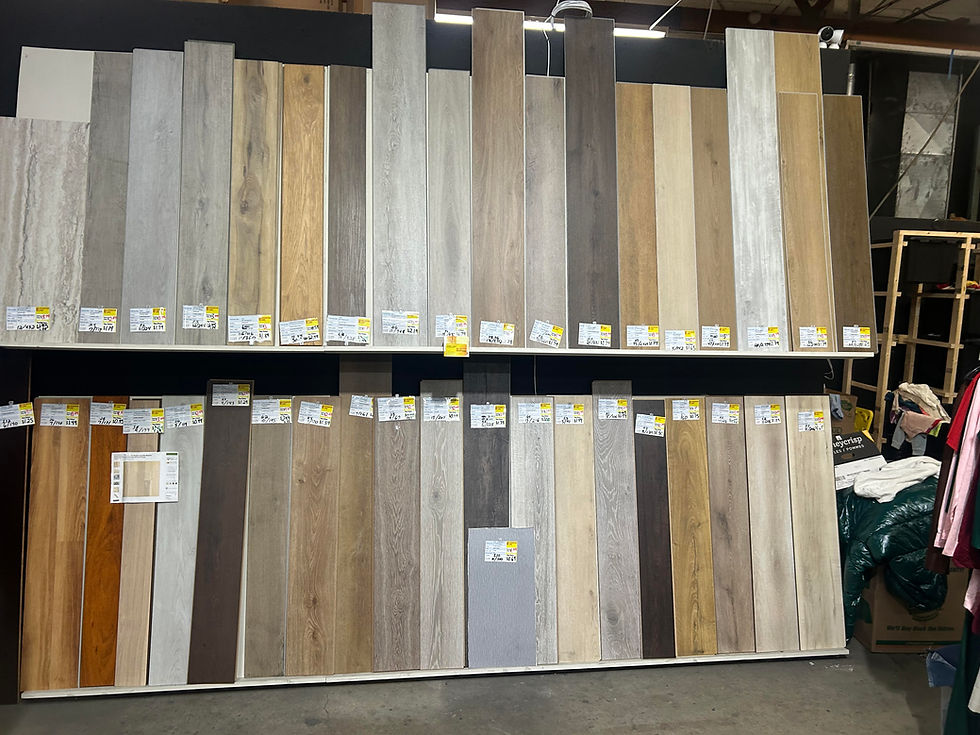
Liquidation Land Discount Flooring in Grandville offers a changing selection of luxury vinyl plank, laminate, tile, and other flooring options for shoppers throughout West Michigan.
Shop Smarter for Your Next Flooring Project
Replacing your floors doesn't have to mean overspending.
By avoiding common buying and installation mistakes, you can make better decisions about the materials you purchase and the money you invest.
Whether you're updating a single bedroom, renovating a kitchen, or replacing flooring throughout your home, preparation makes a difference.
At Liquidation Land Discount Flooring, homeowners, landlords, and contractors can explore discounted flooring options and compare available products in person.
Visit Liquidation Land Discount Flooring
3410 Chicago Dr. SWGrandville, MI 49418
Bring your room measurements, explore the current selection, and find flooring that fits your home and your budget.
Better planning. Better flooring decisions. Better value.


Comments